
Of All Men's Miseries, The Bitterest Is This Herodotus
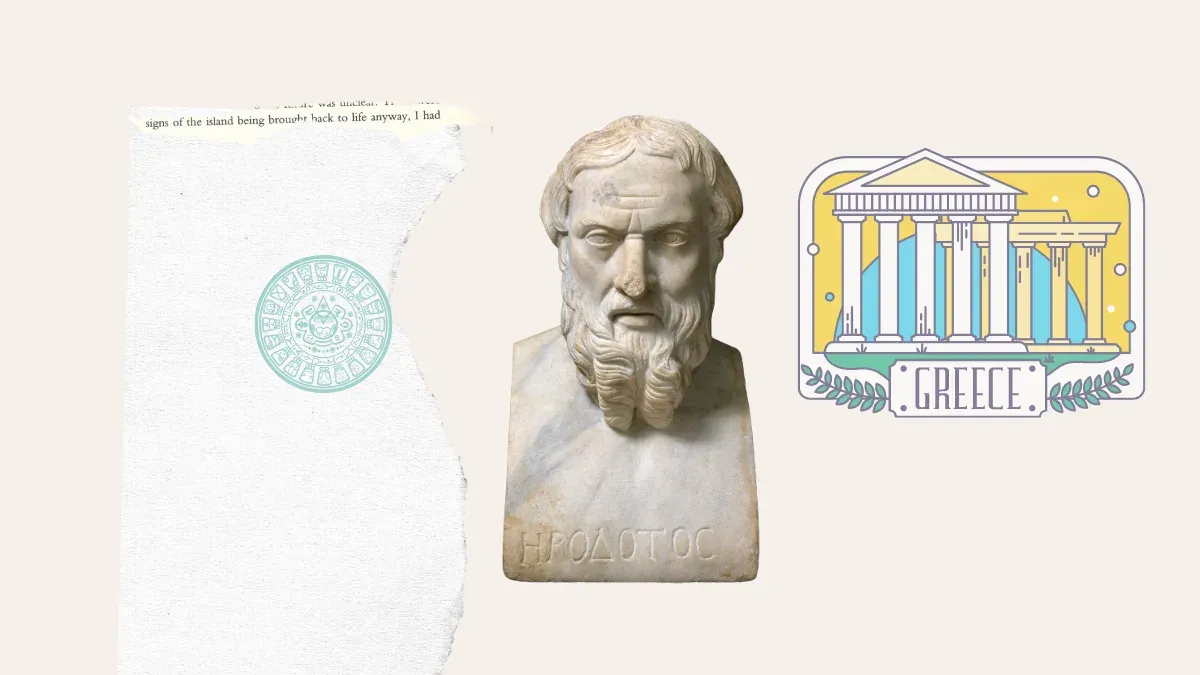
As is customary, we’ll first give the quote in its entirety. This quote is taking place in about 400 B.C., which is about four decades after the conclusion of the Greek victory in the Greco-Persian wars and was indeed spoken by Herodotus.
Of all men's miseries, the bitterest is this: to know so much and to have control over nothing.
— Herodotus
Who was Herodotus?
Herodotus was a Greek Philosopher (though he was born in Persia), who wrote extensively on military engagements in the Greco-Persian war. Known as one of the first “real” historians, much of his writings and sources range from first-person accounts to word of mouth. This fact made him an easy target for contemporaries and subsequent historians who feel he played a little fast and loose with the facts.
Herodotus' most famous work is Histories which is considered by many to be first real historical work in the west. The book is believed to be written at some point in the early fourth century BC, the work gives an account for the rise of the Persian empire and their dicey relationship with the Greek city-states.
Nevertheless, many of the events he described have been verified (even if he was, perhaps), a little sensationalist with how the events he described actually happened. What’s important to take into account about Herodotus, was the world around him at the time of his work. Greece and Persia were battling it out for reigning world power, as the Roman Republic had just been founded and the eventual Roman Empire was still 500 years away at the time Herodotus was speaking.
Furthermore, to help tether this point in time in your mind, this quote is taking place about 100 years, give or take, before the rise of Alexander the Great.
What did Herodotus mean by “to know so much and to have control over nothing”?
A scholarly trend throughout the classical age and through the modern age is to ask the question about the control one has over their own fate. The entire plot of Julius Caesar, which we’ve covered, is about wrestling with whether one has history acted upon them or whether one can create history. In brief, Herodotus is speaking about the futility and depression that sets in, when one realizes that, despite increased knowledge of the world around them, one is nevertheless unable to alter the outcome.
While the quote may be most associated with the Free Will debate and the struggle of whether one is truly free in a deterministic world but, within the context of Herodotus' accounts of war, the quote admits itself of perhaps a more relevant explanation.
At the time of the Greco-Persian Wars, much of the fighting took place at sea (notice the distance and bodies of water that separate Greece and Persia). One might ask, why is this relevant in the context of the Herodotus quote?
The Greek and Persian ships, though they had come a long way since the first ships of war ever built, were still very vulnerable to storms. In fact, the first campaign of the war in 492 B.C., known as Mardonius' campaign, was derailed when a storm near Mount Athos completely wrecked the ship. For all their planning and technical advancements in weaponry and transportation, they were still completely vulnerable to the slightest change in the weather.
What About "to know so much and to control so little meaning"
We've seen quite a few people asking for this phrasing of the quote which is slightly different than our translation. However, in reality, the meaning is mostly the same.
Herodotus, often referred to as the "Father of History," expressed the sentiment that one of the greatest sources of human suffering is the disconnect between knowledge and control. When he said, "to know so much and to control so little meaning," and "Of all men's miseries, the bitterest is this: to know so much and to have control over nothing," he was reflecting on the frustration and anguish that comes from understanding the complexities of life, the world, or human nature, yet being powerless to change or influence outcomes.
This idea taps into a universal human experience: the more we learn and understand about the world, the more we become aware of our limitations. For example, someone may have deep knowledge of political systems, social injustices, or personal health issues, but despite this knowledge, they may find themselves unable to enact meaningful change, whether due to societal constraints, the randomness of fate, or the limitations of human ability.
In essence, Herodotus is highlighting a profound existential dilemma: the more one knows, the more one might feel the weight of their own impotence in the face of life's uncontrollable circumstances. This awareness can lead to a deep sense of powerlessness and despair, as knowledge alone does not grant the power to change the world.
Modern Usage of the Quote
Despite being written 2,500 years ago, the quote by the ancient Greek historian continues to pile on the citations both in popular writing and in the academic setting. The quote has been cited in papers ranging from the research on terrorism to social theory to research on antipsychotic drugs.