
Never Trust A Computer You Can't Throw Out A Window Steve Wozniak
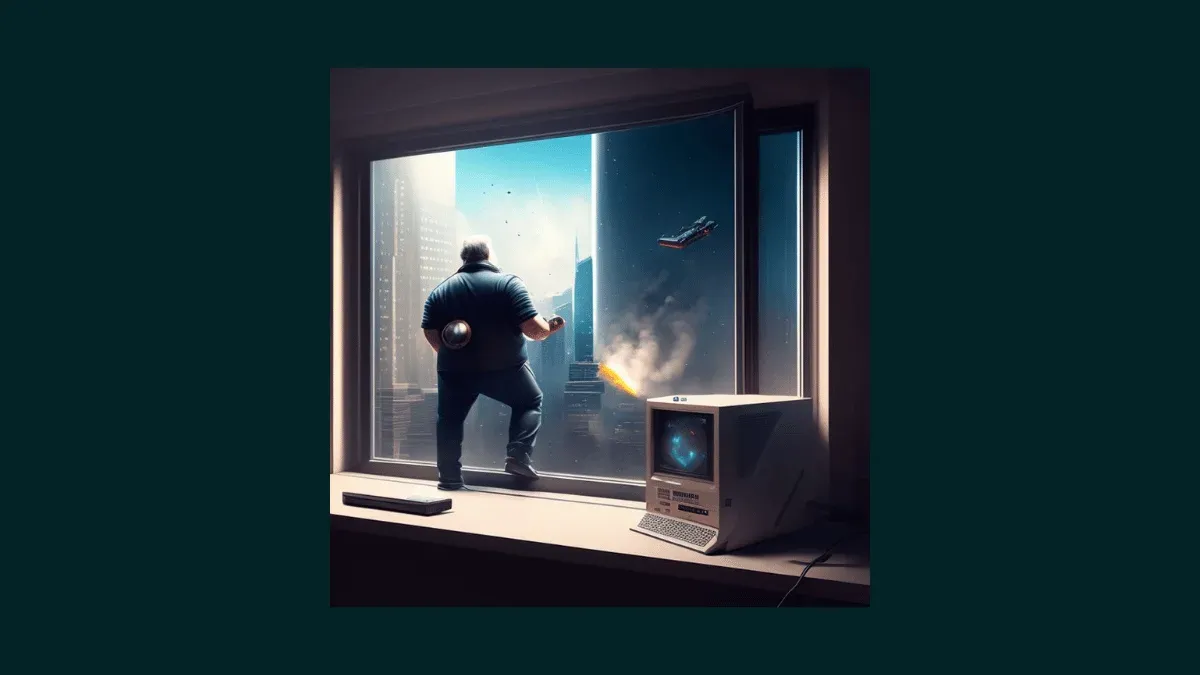
First, as always, the full quote is attributed to Steve Wozniak, co-founder of Apple computers and visionary entrepreneur.
Never Trust A Computer You Can't Throw Out A Window
Did Woz say it?
Here's the thing. We've been able to find numerous print sources linking Steve Wozniak to this quote and, so far, only one (an unreferenced comment on Quora) that says it is misattributed to him. We're going to say that we believe Wozniak said it, but ask those that have evidence one way or the other to let us know (please) if they are able to track down verification that the quote does in fact belong to the Apple visionary.
A Little About The Woz
Born on August 11, 1950, in San Jose, California, Steve Wozniak developed an interest in electronics at a young age and began tinkering with computers while still in high school. He attended the University of California, Berkeley, but dropped out after only one year to work for Hewlett-Packard as a computer designer.
In the mid-1970s, Wozniak designed the first Apple computer, the Apple I, which was released in 1976. He later developed the Apple II, which was a huge success and helped launch Apple as a major player in the personal computer market.
Despite his success with Apple, Wozniak left the company in 1985 to pursue other interests, including teaching and philanthropy. He has continued to be involved in the technology industry, and in 2001 he co-founded Wheels of Zeus, a company that developed wireless location-tracking technology.
Wozniak has received numerous honors and awards for his contributions to the technology industry, including induction into the National Inventors Hall of Fame in 2000 and the Computer History Museum's Hall of Fellows in 2001. He is also an avid philanthropist and has donated millions of dollars to educational and charitable causes.
What Does The Wozniak Quote Mean?
As we referenced in the beginning, computers use to be enormous and couldn't be thrown out of windows. Not only could they not be thrown out of windows, they couldn't fit into homes. If an engineer, scientist or researcher wanted to use one they had to rent time on it at their local university or use the one at their office. As such, whatever you did on it, whatever the next guy or girl does on it, and every combination is out of your control.
Personal computing changed that forever and always as people now are free to control what they see and do on their computer and do not have to share the time with others around them.
Have a different interpretation of the quote? Let us know and, if we like it, we'll publish it.
Here's a long-form blog post that you can copy and paste into your existing post:
Update: Beyond Size: The Deeper Meaning Behind Wozniak's Window Quote
When we first wrote about Steve Wozniak's quote "Never trust a computer you can't throw out a window" it has become one of the most memorable statements in computing history. While our initial interpretation touched on the physical evolution from room-sized mainframes to personal computers, there's a deeper philosophical dimension to this statement that's worth exploring.
The Philosophy of Control and Autonomy
At its heart, Wozniak's window quote isn't just about size—it's about autonomy and control. When he made this statement, Woz was articulating a fundamental principle about our relationship with technology: users should have sovereignty over their devices rather than being controlled by them.
The historical context makes this philosophy even more powerful. When Wozniak co-founded Apple and helped design the first personal computers, the computing landscape was dominated by massive mainframes that required specialized knowledge and institutional access. These machines weren't just physically immovable—they represented a centralized computing paradigm where ordinary people had to request time and permission to use technology that ultimately wasn't under their control.
By advocating for computers you can "throw out a window," Wozniak wasn't literally suggesting people discard their devices. Rather, he was emphasizing that technology should be accessible, manageable, and ultimately disposable if it fails to serve its owner's needs. The ability to physically pick up, move, and yes—even throw away—your computer symbolized a revolutionary transfer of power from institutions to individuals.
Tracing the Quote's Origins
The quote appears to have gained prominence around 2009, as it's frequently attributed to an April 22, 2009 interview with Kevin Purdy for Lifehacker titled "How Apple Co-Founder Steve Wozniak Gets Things Done." This attribution appears consistently across multiple quote repositories, though the original interview context isn't widely available.
This timing is interesting, as it came during a period when computing was undergoing another transformation—moving from desktop-centric experiences to mobile and cloud-based computing. Perhaps the quote resonated because it reminded us of core values that risked being lost in this transition.
Wozniak's Consistent Vision
Throughout his career, Wozniak has championed user autonomy, simplicity in design, and technology that empowers rather than overwhelms. In his book "iWoz: Computer Geek to Cult Icon," he explains that his goal wasn't primarily to make money but to build good computers that would help people. This philosophy aligns perfectly with the sentiment behind the "throw out a window" quote—technology should serve its users, not the other way around.
While Steve Jobs is often credited with Apple's focus on user-friendly design, Wozniak's engineering brilliance was guided by similar principles. He sought to create technology that was approachable and put control in the hands of users, not gatekeepers or corporations.
Contemporary Relevance
This quote has gained renewed relevance in today's tech landscape. As our devices become increasingly integrated into every aspect of our lives, Wozniak's concern about maintaining control over technology seems almost prophetic.
In an era of cloud computing, internet-connected appliances, and services that can't be easily abandoned or replaced, the ability to metaphorically "throw a computer out a window" when it no longer serves you has become more challenging. Many of us feel locked into digital ecosystems that make it difficult to walk away—whether it's social media platforms that hold our social connections, cloud services that store our documents, or smart home devices that control our living spaces.
Wozniak's quote reminds us to question this dependence and consider whether we've surrendered too much control to technologies we cannot fully manage or disconnect from. It asks us to evaluate whether our relationship with technology is one of empowerment or entrapment.
The Future of Technological Autonomy
As we look toward the future of computing with artificial intelligence, virtual reality, and ever more integrated technologies, Wozniak's philosophy remains a crucial touchstone. The question isn't just whether we can physically move our technology, but whether we maintain meaningful agency over the systems that increasingly shape our world.
Perhaps the modern interpretation of "throwing a computer out a window" is less about physical disposal and more about having the freedom to opt out—to delete accounts, to choose alternatives, to disconnect temporarily, or to modify systems to better serve our needs rather than corporate interests.
A Timeless Reminder
While the physical reality of computing has changed dramatically since Wozniak co-founded Apple, the underlying principle of his famous quote remains timeless. Technology should empower us, not constrain us. It should expand our capabilities while respecting our autonomy. And ultimately, we should be able to walk away from it when it no longer serves our needs.
The next time you look at your smartphone, laptop, or smart home device, consider whether it's a tool that serves you or a system that controls aspects of your life. Can you metaphorically "throw it out a window" if needed? If not, perhaps it's worth reconsidering your relationship with that technology.
In this light, Wozniak's quote isn't just a witty observation about computer size—it's a philosophical stance on human agency in an increasingly technological world, and a reminder that the most important feature of any technology is that it remains under human control.