
What is History But a Fable Agreed Upon
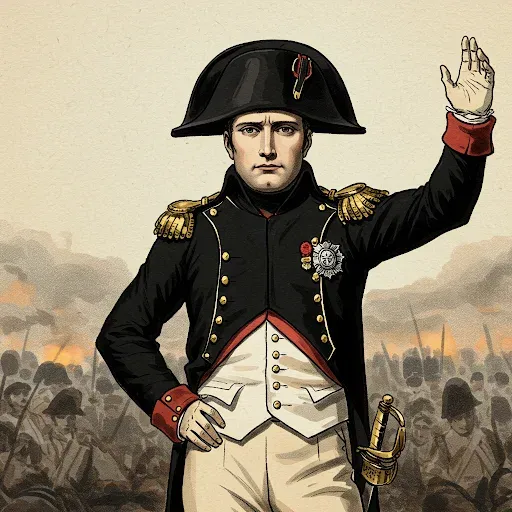
When Napoleon Bonaparte allegedly stated, "What is history but a fable agreed upon?", he captured a profound truth about historical narratives that continues to resonate across centuries. This skeptical view of historical accounts challenges us to consider how history is constructed, who writes it, and for what purpose.
Let's this fascinating quote, its origins, and its implications for how we understand the past.
Origins of the Quote
Napoleon Bonaparte (1769-1821) was one of history's most influential military and political leaders. Rising to prominence during the French Revolution, he eventually crowned himself Emperor of France and conquered much of Europe before his ultimate defeat and exile.
The quote "What is history but a fable agreed upon?" is commonly attributed to Napoleon, though like many famous historical quotations, its exact origins remain somewhat ambiguous. Some scholars believe Napoleon made this statement during his exile on Saint Helena, where he spent considerable time reflecting on his legacy and how history would remember him.
Napoleon was keenly aware of how historical narratives could be shaped and manipulated. Having witnessed the dramatic rewriting of French history during and after the Revolution, he understood that those in power often control historical narratives.
Historical Context
To fully appreciate the quote, we must understand the historical context in which Napoleon lived and operated:
Post-Revolutionary France
Napoleon emerged during a period when France was actively rewriting its history. The French Revolution had toppled the monarchy and was systematically dismantling centuries of traditional narratives about divine right and aristocratic privilege. New republican histories were being created to legitimize the revolutionary government.
Napoleon's Own Propaganda
Napoleon himself was a master of propaganda and image management. He commissioned paintings, sculptures, and historical accounts that portrayed him as a heroic figure continuing the revolutionary ideals while bringing order to chaos. He carefully cultivated his historical image through bulletins, newspapers, and official histories.
The famous painter Jacques-Louis David created iconic images of Napoleon that helped shape how contemporaries and future generations would see him. Napoleon understood that controlling one's image in historical narratives was crucial to maintaining power and securing legacy.
European Historical Traditions
By Napoleon's time, European historians were still transitioning from medieval chronicle traditions toward more modern historical methods. Many historical works still blended fact with myth, national pride with objective reporting. The scientific approach to history was in its infancy.
Philosophical Implications
Napoleon's quote raises profound philosophical questions about the nature of historical truth:
Subjective Nature of Historical Accounts
The quote suggests that history isn't an objective record of past events but rather a narrative constructed through consensus. It acknowledges that historical accounts inevitably reflect biases, perspectives, and the interests of those writing them.
Power Dynamics in Historical Narratives
By characterizing history as a "fable agreed upon," Napoleon hints at the power dynamics involved in creating historical narratives. Throughout history, dominant groups have shaped historical accounts to justify their position and actions. The victors, as the saying goes, write the history books.
Truth vs. Narrative
The quote challenges us to distinguish between historical truth and historical narrative. While events certainly happened in the past, our access to them is always mediated through accounts, documents, and interpretations, all of which are shaped by human biases and limitations.
Modern Relevance
Napoleon's skeptical view of history feels particularly relevant in our contemporary era:
Historical Revisionism
Modern historians continually revise historical accounts as new evidence emerges and new perspectives gain prominence. This ongoing process of revision demonstrates how historical narratives evolve rather than remaining fixed truths.
Media and Information Age
In today's information-saturated environment, we see competing narratives about current and historical events constantly emerging. Social media, partisan news sources, and global communication have multiplied the "fables" competing for agreement.
Post-Truth Politics
The concept of "alternative facts" and debates about what constitutes truth in political discourse echo Napoleon's skepticism about historical narratives. His quote reminds us that the struggle over who controls historical narratives remains central to political power.
Different Interpretations
This quote can be interpreted in multiple ways:
Cynical View
Some see Napoleon's statement as cynical, suggesting that historical truth is impossible and that history is merely a tool for manipulation. Under this interpretation, Napoleon might be justifying his own manipulation of historical narratives.
Cautionary Perspective
Others interpret the quote as a caution against accepting historical narratives uncritically. By recognizing history as partly constructed, we become more critical readers of historical accounts and more aware of the biases inherent in them.
Philosophical Insight
A more philosophical reading sees Napoleon acknowledging the inherent limitations of human knowledge about the past. Even with the best intentions, our understanding of history will always be incomplete and shaped by our own perspectives.
Similar Historical Perspectives
Napoleon wasn't alone in his skeptical view of historical narratives:
George Orwell
In his novel "1984," Orwell famously wrote, "Who controls the past controls the future. Who controls the present controls the past," highlighting how political powers manipulate historical narratives for their own purposes.
Michel Foucault
The French philosopher argued that history is inseparable from power relations and that historical narratives often serve to legitimate existing power structures.
Voltaire
The Enlightenment philosopher, who influenced the intellectual climate of Napoleon's era, noted that "History is the lie commonly agreed upon," a strikingly similar sentiment to Napoleon's quote.
Frequently Asked Questions About Napoleon's Quote
Who said "What is history but a fable agreed upon"?
This quote is commonly attributed to Napoleon Bonaparte (1769-1821), the French military leader and emperor. He allegedly made this statement during his exile on Saint Helena, where he spent time reflecting on how history would remember him and his legacy.
What does "What is history but a fable agreed upon" mean?
This quote suggests that history is not necessarily an objective record of past events, but rather a narrative that has been constructed through consensus. It implies that historical accounts often reflect the biases and interests of those who write them, and that what we accept as "history" is sometimes more akin to a commonly accepted story than pure factual truth.
When did Napoleon say this famous quote?
The exact timing of when Napoleon made this statement is not precisely documented. Many historians believe he expressed this sentiment during his final exile on the island of Saint Helena (1815-1821), where he spent considerable time dictating his memoirs and reflecting on how history would judge him and his actions.
Why is Napoleon's quote about history still relevant today?
This quote remains relevant because it reminds us to approach historical narratives critically. In today's era of "fake news," competing media narratives, and historical revisionism, Napoleon's insight encourages us to question who creates historical accounts, for what purpose, and what perspectives might be missing. It highlights the ongoing tension between objective historical truth and subjective historical narrative.
Did Napoleon manipulate historical narratives himself?
Yes, Napoleon was a master of propaganda and image management. He commissioned paintings, sculptures, and historical accounts that portrayed him in a heroic light. He carefully controlled how his military campaigns were reported in bulletins and newspapers. His statement about history being a "fable agreed upon" could be seen as reflecting his own understanding of how historical narratives can be shaped to serve political purposes.
How does this quote relate to modern historical methods?
Modern historical methodology acknowledges the subjective nature of historical accounts that Napoleon pointed out. Contemporary historians strive for objectivity by using multiple primary sources, cross-referencing documents, acknowledging their own biases, and considering diverse perspectives. While modern historical methods aim for greater accuracy, Napoleon's quote reminds us that all historical narratives involve interpretation and selection.